Thursday, 7 December 2017

Orange - the jugular of the Northern Cape


Just outside Alexander Bay we meet her again - an old friend!  The Orange River... jugular of the Northern Cape. The artery for the vineyards of Upington, Keimoes and Kakamas, thundering her way past Augrabies to Onseepkans. We know of her path past the missionary station at Pella, the small lucerne farms at Goodhouse, know her to be the bridge to wild adventure at Noordoewer and of the refreshment she brings to the Richersveld in summer when the mercury rises all the way past 50 degrees Celsius.  But never is the contrast between a river's course and her surroundings as stringent as here…


Down in the valley the water is winking at us, seamed by the only bit of green in the barren, grey and sandy earth - an oasis for the southern parts of the Namib desert. But it is here where the queen of the South African rivers is in agonizing deterioration! We know her to be bigger, broader, deeper and prouder than here where her path takes her between the formerly forbidden twin towns of Alexander Bay and Oranjemund. This is a 2 173 km-long wonderful gift, the fourth largest river in Africa, draining 45% of South Africa and we need her! The fact that she looks like this here, is testimony of the fact that 23 dams were built in her catchment area - water is life! A gift from God!


Every now and then she shows us her true majestic nature when she storms her way to the ocean through her floodplains - like she did in 1988 when a whopping 7 800 cubic meters (per second!) of water thundered its way down the Augrabies falls on the way to Alexander Bay. Luckily the river's gradient is quite low after passing through the falls, meaning it took days for the floodwaters to reach the twin towns. Leaving the locals just enough time to strengthen the southern river bank with the earth-moving machines of the mining companies nearby. The river took about one million tons of sediment from the north bank, sweeping it to the ocean and broadening her floodplain significantly. According to calculations, about 3,6 million tons of sand was pushed about 1,2 km into the ocean and dropped in a delta. It will most likely take a few years for the ocean to spread the sand along it shores.

In 1988 the flow of all these kiloliters of warmer fresh water from the Orange river into the colder ocean, could be followed by satellite imaging as it made its way south and along the shores of the Atlantic ocean. The results were catastrophic as it destroyed inter-tidal and shallow-water marine organisms such as mussels, urchins, limpets, red bait, rock lobster and kelp.

Large areas of the wetlands' flora were also destroyed, damaged by erosion or buried underneath tons of coarse sand - all because of these floods. Today species like Scirpus- and Sporobolus sedges, saltworts (Sarcocornia sp) and common reed (Phragmites australis) dominate the wetlands.

But the sad reality is that the majestic river is in bad shape, and this is not because of the flooding described above. This highly disturbed, modified ecological system is a result of years of degradation due to mining activities, flow regulation of the river and poor management of the river mouth. An estimated 40% of the river mouth is degraded or changed due to the cultivation of lucerne, mining activities, wind erosion, roads and sewage ponds. 


But the bad news doesn't stop here...

The rising demand for water for domestic, industrial and farming purposes in the Orange river's catchment area, puts the natural resource in the lower reaches of the river under immense pressure. The withdrawal and the regulating of water by the large number of dams in the river, has lowered the annual flow by half. If we build even one more dam in this river, the results will be catastrophic for the wetlands already struggling to survive at the river mouth. It could even lead to the river drying up periodically. Another problem is that the pollution by farmers, mines and other businesses along the river combined with the already lower water level increases the chemical and nutrient load of the river, which in turn encourages algal bloom.

The numbers of invasive or alien flora species like Mesquite Prosopis increased immensely after the 2011 floods; together with six other non-indigenous species they are considered a huge threat to the struggling wetlands.

Another threat is the pressure put on the sensitive area by the locals, for instance the catching of fish with gill nets, also the illegal hunting with dogs on the river banks and the poaching of ducks and geese. Stray dogs also cause problems on the islands and river banks, especially during the breeding time of various bird species. Quad bikes and other 4x4's, whose owners do not follow the existing roads and do not keep to the laws, are also responsible for substantial damage being done from time to time. 

Luckily for us, all is not lost...


In 1991 the wetlands here were declared a Ramsar area and in 2001 Alexcor, the diamond company owning big parts of the land surrounding Alexander Bay, promised to rehabilitate the area and restore the wetlands. "Working for Wetlands" has finished a few smaller rehabilitation projects by 2005. In 2013 Alexcor applied to be allowed to start certain rehabilitation projects and in 2014 the "Endangered Wildlife Trust" started monitoring the bird life and alien flora with their "Source to Sea Program".

Although the rehabilitation of the river, wetlands and coast will take a long time and most likely won't restore the area to its original state, aforementioned efforts are good news. And the efforts show a willingness to go in the right direction. We're cautiously optimistic for significant results... 

Alexander Bay... and now?

Team Jacobus has arrived safely in Alexander Bay. We thank the Lord for travel mercies.

From now on this is what you can expect on the blog:

1. Regular (almost daily) informative, scientific posts on the environment, nature, fauna, flora, animal activities and how the human manifests itself in all this.  This will be in English.

2. Regular (very regular) posts on the people we meet and places we go - this will be in Afrikaans and this will give the human touch to the story of "Footsteps to Good Hope".

3. Last but not least, the daily devotions Jacobus and his support team will read. These are also in Afrikaans. 

In this manner we hope to keep you all completely up to date.

So... from Alexander Bay we go... 

Good night.

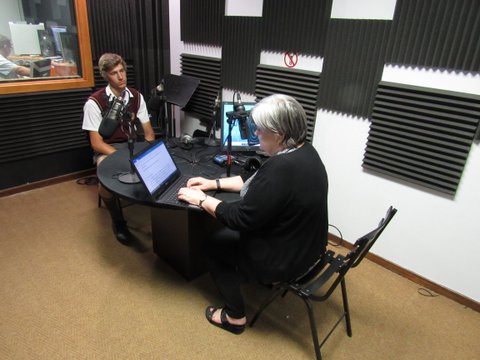
Another interview!

Join us on  RSG on Sunday 10 December @ 7:00 am for another radio interview - recorded by Lizelle de Bruin with Jacobus before we left.  This interview is part of the religious lifestyle program called "Sondagjoernaal".


Don't miss it!

(Oooh all right, if you DO happen to miss it, we will try and upload the Potgooi link later next week.)

Update... Are you excited?

Today we left for Alexander Bay. Around 8:54 we were in Citrusdal. The world is dry, the weather hot and the anticipation palpable...


So if you are counting:

16 hours and 36 minutes 

before we have take off. 

Nothing much we can do now but pray and have faith that all our planning, organising, thinking ahead, preparing and training will bear fruit and that we - Lord willing - will finish in 41 days in The Cape of Good Hope Nature Reserve... 977km later, stronger, tired, thankful, tearful and more aware than ever of our almighty Creator and loving Father.


Tuesday, 5 December 2017

It's all in the planning...

For almost a year Footsteps to Good Hope was in the planning phase. I am not sure what we are going to do with all the excess time we'll have on our hands as soon as this epic adventure is over!

What was there to plan?
Well, the route for starters.  How to get from Alexander Bay to Cape of Good Hope hiking along the coast? Where will Jacobus be permitted to walk freely and where will there be permits, permission and regulations applicable in the hiking? Restricted areas were a possible hurdle, high cliffs and dangerous tides could be a risk.  So this part of the planning took the longest and was the most intense and nerve wrecking. We literally finished the route planning yesterday evening at around 23:15! For every day of the hike, Jacobus will have maps and photos like these, spelling out everything from coordinates to little rivers and small hamlets.


Part of the planning was the food and water issue. With this Henriette had the help of one of our "old boys", or rather "old girls".  She is a third year BSc Dietician student and was more than willing to help with ideas and guidelines. Thanks, it was an experience to work on the same foot with one of our pupils of years ago. Enjoy your holiday and good luck with your final year!


The planning also revolved around gear, what to take, what will Jacobus really need and what are nice-to-haves. One of the most important things were the tracker and the possibility to have contact with Jacobus - by satellite and mobile: the latter was completely sorted out yesterday afternoon when we purchased a mobile phone with enough data and minutes to help us through. The number: +27 61 008 0935. Send him a message of encouragement.


Planning was also in the details of the projects (see an earlier post). In the finalising of his daily devotions in which Martin de Wit played an enormously important role. In the overnight accommodation of the support team. In getting everything in order for Maricia to join Jacobus from the 27th of December. In getting our T-shirts printed with the logo we mentioned in an earlier post.


So, it all started with a plan. And that plan took a lot of planning.  And now - Lord willing - we can put all these plans to action starting Friday 8th of December. Join us on Facebook and here on the blogspot - we plan to keep you posted!


Monday, 4 December 2017

The countdown has begun...


3 days… 19 hours… 11 minutes

And so time has gone by, matric exams are finished, Jacobus joined the veldskool with the grade 6 and 7's of Gereformeerde Laerskool Bellville in the Cederberg, and from today till 13 January 2018 everything in the Van der Linden-household is about Footsteps to Good Hope.


Sorting the day packs!


Salomien not afraid to get her hands dirty while helping...


Can you survive on this for a day... and for 40 days?


Last minute changes in gear, a few items still to be bought, a couple of finishing touches to other lists and arrangements... We are gearing up and almost ready to go. 

Fine-tuning packing to an art

Nothing would have come from the novel idea and dream of Jacobus to do an eco-hike for conservation awareness, if it were not for the following businesses and individuals:


A Rocha
Continental Cobbles
Sealand
Ben Groot Attorneys
Dried Fruit for Africa
Plastic SA
Tracks4Africa
Supa Oils
Ekcon
Starcivils
Cape Town Environmental Education Trust
Gert Klapwijk
Roelof Hoving
Frans Douma
Andre van den Berg
Henk Boesenkool
Paul Verhagen
Alex van der Linden
Kokkie Kooijman
Elizma de Kock
Erik Raimond
Hanu Conradie 
Hanlie Smuts
Tannie Ella Mileham
Ouma Salma Loots
John Fincham
Dave McDonald

A mere thank you sounds almost inappropriate. But this thank you comes from the bottom of our hearts... It comes from the sandy beaches, the wetlands and the sharp rocks...  It comes from the fish, the lobsters and seals, the Black Oystercatchers and the little birds and ocean creatures suffering from the nurdle pollution... To use the beautiful words in Scripture: Romans 8: 20-22: 

"For the creation was subjected to frustration, not by its own choice, but by the will of the one who subjected it, in hope that the creation itself will be liberated from its bondage to decay and brought into the freedom and glory of the children of God. We know that the whole creation has been groaning as in the pains of childbirth right up to the present time."

May Jacobus' eco-hike be the start of a new era in South Africa and around the world, where the new generation see their duty and the opportunities to do good (and do better) to the environment they live in - the creation that God has given them (us!) to reign over but also to take care of and to conserve.

Happy hiking Jacobus!


Wednesday, 15 November 2017

Where we go one, we go all

Bogenoemde is die leuse van een die uitdagendste avonture waaraan `n Suid-Afrikaanse hoërskoolseun hom kan blootstel.  Sewe dae van honger en uitputting...  Oorgelewer aan die natuurelemente...  Karakteropvoeding deur avontuur!


Die Grosvenor Oorlewingstap is `n kursus wat lewens verander.  `n Kursus wat jou wegvat uit jou comfort zone, jou grense verskuif en jou leer om te oorleef in die natuur.  `n Kursus wat van seuns jong manne maak.


Met net die nodige klere aan hulle lywe en geen tente, kussings of slaapsakke nie, word daar van die jong manne verwag om binne 7 dae die 83km vanaf Wildernis tot by Hartenbos, te voet te voltooi.


Op die oog af lyk dit nie te erg nie... Maar probeer dit sonder kos in jou maag...
Want dit is die ding wat die Grosvenor so tough maak.  Elke kursusganger moet hoofsaaklik hul kos en water uit die natuur kry.  As `n man honger is, lyk selfs `n brandsiek hond uit `n lokasie na `n heerlike maaltyd.  Al gou leer hulle dat honger die beste kok is en word naarstiglik na enigiets te ete gesoek: paddas, mossels, riete en selfs skerpioene.  

Dit was juis Jacobus wat in 2013 op sy eerste Grosvenor vir die manne geleer skerpioen eet het.  Daardie jaar was `n besonderse moeilike jaar aangesien die weer ook nog teen hulle was en dit vir drie dae lank aaneen gereën het en bitter koud was.  Natuurkos was skaars en Jacobus het 11kg verloor binne `n week.   Dit was egter ook die week waarin hy nog die meeste Bybel gelees het...


Tydens hierdie kursus word jou uithouvermoë en karakter tot die uiterste getoets.  Manne wat swaarkry word deur spanmaats gehelp.  Soms moet jy ekstra gewig dra om jou maatjie te help.  Ander kere moet jy motiveer of selfs van jou kos deel as ander nie meer het nie...  

Where we go one, we go all.  Turning back is no option.

Almal is trots en dankbaar as die eindpunt in Hartenbos bereik word en hulle gulsig kan weglê aan die kos wat voorgesit word.  Mammas (en pappas) staan met trane in hul oë.
Oom Ewald Crause, of “Seevader” soos hy aan die Suid-Kaap bekend staan, het 41 jaar gelede hiermee begin. `n Kursus waarin seuns deur swaarkry hulself leer ken, hul karakter bou en deursettingsvermoë leer.  Deur die jare is oom Ewald bygestaan deur `n handjievol instrukteurs – manne met hare op hul tande wat jaar na jaar terugkom vir nog...


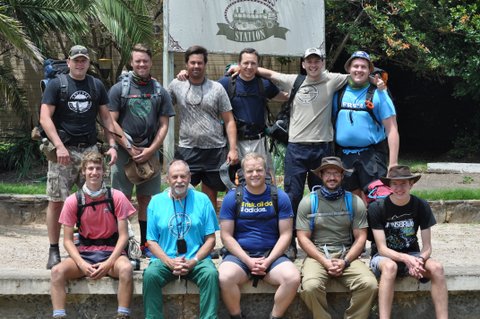
Vir die afgelope drie jaar was Jacobus so bevoorreg om deel te wees van hierdie groep en het hy `n hegte vriendskapsband gesmee met manne soos Kosie Gericke, Johan Potgieter,  Josef Krone, Alain Krog en Anro Taljaart.  Manne vir wie hy `n geweldige respek het.

In die afgelope jaar het die Here een van hierdie besonderse mense, Alain Krog, tot Hom geneem.  Hy was iemand wat altyd `n groot inspirasie was vir Jacobus en baie ander Grosvenor-manne.


Jacobus het skuldig gevoel omdat hy hierdie jaar sy eie ding doen en die ander instrukteurs vir 2017 se Grosvenor drop.  Veral omdat hulle nou sonder hom en Alain moet regkom.  Hy weet dat hulle nou al begin gereed maak vir die uitdaging oor drie weke... 

Daarom wil hy met hierdie post sy Grosvenor-makkers die Here se seën toewens.  Mag Hy julle beskerm en alles gee wat julle nodig het.  Mag Hy julle gebruik om vanjaar net so `n groot rol in die lewe van die jong manne  te speel, soos wat julle in sy lewe gespeel het.

Dit is te danke aan die drie Grosvenors waaraan hy deelgeneem het, dat Jacobus hierdie groot projek “Footsteps to Good Hope” aanpak.  Hy hoop om oom Ewald en van sy Grosvenor-maats by Kaappunt te sien as hy DV die 13e Januarie 2018 by Kaappunt klaarmaak.


Where we go one, we go all...